How Can Commercial Kitchens Make Better Use of Corner Space With a Stainless Steel Sink?
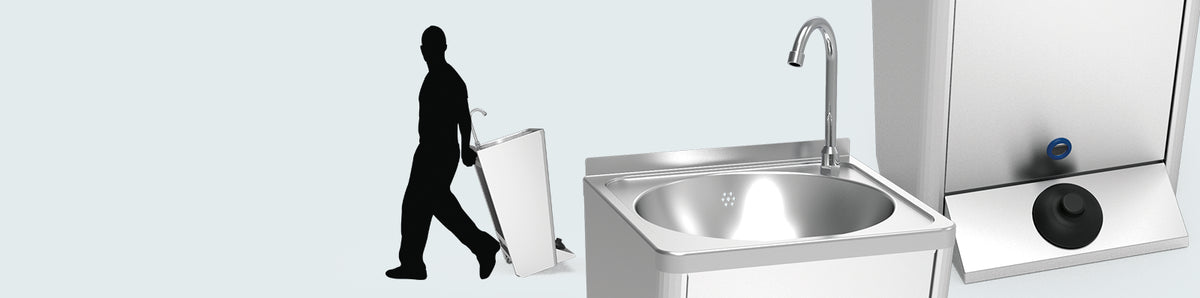
Corners are the dead spots of most commercial kitchens. Nobody wants to stand in them, nothing slides in easily, and they usually end up holding a bin or a stack of crates. A stainlesssteel corner sink turns that wasted spot into a proper hand wash point, which leaves the walls along the prep line free for equipment. It won't replace the pot wash or the prep sink, though. It's a dedicated place for hands, tucked where it doesn't get in anyone's way.
Why Corners Make Sense for Hand Washing
Hand washing needs its own fixture. Under
the UK version of Regulation (EC) 852/2004, food premises need an adequate
number of washbasins, suitably located and designated for cleaning hands. They
also need hot and cold running water, materials for cleaning hands and hygienic
drying. Local council guidance adds that the facilities for washing food and
equipment should be separate from the hand-washing facility and that the basin
should be connected to effective drainage.
So a kitchen that already has a prep sink
and a pot wash still needs another spot where staff can wash their hands. A
corner is often the one place left that doesn't eat into a working wall.
What to Look for in a Stainless Steel Corner Sink
A few details separate a good corner
basin from an annoying one. For any professional stainless steel sink,
the basics are:
●
stainless steel throughout, with a
finish that wipes clean
●
hands-free control, like a knee
button or foot pedal, so dirty hands never touch the tap
●
anti-drip edges, which matter more
in a corner because the walls are close and splashes bounce back
●
hot and cold mixing, since the
rules call for both
●
somewhere to put things, and a
closed frame with a shelf inside is a bonus in a tight space
Where the Lioninox Corner Sink Fits
If you are looking for a sturdy and
reliable corner hand sink, Lioninox is your answer. Lioninox
has a plumbed XS corner hand sink that comes with a satin finish. It has a
stainless steel tap and a knee button, along with anti-drip edges on the top of
the sink. Also, it has a frame with three sides with an interior shelf and also
a detachable front door.
At about 35 cm along each side, this commercial
stainless steel corner sink is small enough for the tightest spots. The
wider plumbed range is aimed at professional settings like kitchens, medical
facilities, and commercial spaces, and some of those models use a foot-operated
as well as knee-operated ones.
Planning the Install
This one needs plumbing, so sort that out
first. The product page says it has to be connected to a water supply and
drainage. That means the pipework should be in the wall or floor near the
corner before the unit arrives.
Put it where staff pass on their way in
and out of prep, keep it clear of the food itself, and leave room nearby to
swing a door or turn a trolley. Soap and paper towels go right beside it,
because the regulations list materials for cleaning and drying hands alongside
the water. A stainless steel corner sink that's awkward to reach or
short on supplies tends to get ignored.
Conclusion
Corners are free space if they're planned
for. A compact basin with hands-free control, mixed hot and cold water, and
easy-clean steel gives staff a proper hand-wash point without costing the
kitchen any working wall. Plan the plumbing early, and the stainless steel
corner sink takes care of the rest.
Planning a kitchen refit? See the plumbed hand washbasins at Lioninox, or ask
the team about corner options.


Comments
Post a Comment